
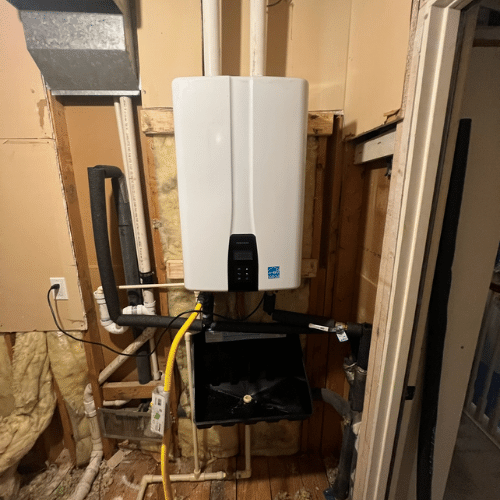
Water Heater Installation Tailored to Your Household Needs
A lot of McKinney homeowners call us after the same frustrating sequence: the kids shower first, the dishwasher runs, and then—right when everyone needs hot water—the faucets turn lukewarm. Sometimes it’s “just a water heater problem.” Other times, it’s a sizing issue, a venting issue, or a unit that’s been struggling for years and finally gives up.
In North Texas, that moment matters. Our summers are hot, winters can still bring cold snaps, and many homes sit on slabs or have plumbing runs that don’t forgive poor installation. If your water heater is undersized, mismatched to your fuel type, or installed without accounting for your household’s real usage patterns, you’ll feel it immediately in performance—and you may pay for it again in repairs.
Quick Answer
The best water heater installation is the one sized to your home’s hot-water demand and matched to your fuel setup (electric or gas) and venting requirements. A professional plumber should confirm your current system’s performance, check water pressure and flow, review your household usage (showers, laundry, dishwasher), and ensure correct venting and safety controls. If your current unit is short-cycling, leaking, or failing to recover quickly, installation may be the right step—especially when repairs won’t restore reliable hot water.
What We Commonly See in McKinney Homes
One scenario we see often: a family with a 2–3 bathroom home adds a teenager’s shower schedule, then starts noticing longer recovery times. They may also notice sediment at the bottom of the tank, slower hot-water delivery at one side of the house, or temperature swings during showers.
A firsthand technician observation from our work: when we remove an older tank, we frequently find the heating surface coated with sediment—sometimes unevenly. That uneven buildup can cause the thermostat to cycle in a way that looks like “the heater isn’t keeping up,” when the real issue is reduced heat transfer. The tank can still run, but it takes longer to heat the water, and the recovery time gets worse with every cycle.
How we tailor installation to your household
A proper installation isn’t just swapping one tank for another. We typically evaluate:
- Hot-water usage pattern: number of bathrooms, frequency of laundry, dishwasher use, and whether hot water is used simultaneously.
- Recovery expectations: how quickly you want the system to return to set temperature after peak use.
- Existing plumbing conditions: aging supply lines, water pressure behavior, and any signs of leaks or scale buildup.
- Unit type and fuel compatibility: whether you’re better suited for an electric water heater or a gas water heater, and what it takes to do it safely and correctly.
If you’re also dealing with leaks, it’s worth addressing those alongside the installation. Hidden moisture under flooring can be tied to supply line issues that don’t always show up until you disturb finishes. If you suspect a leak, consider leak location repair before or during your water heater upgrade.
Signs You Need a Water Heater Installation (Not Just “a Repair”)
Water heater repair can be the right move—but installation becomes the smarter option when the unit’s condition or performance won’t realistically improve.
Common signs include:
- Repeated temperature problems (water too hot one minute, lukewarm the next)
- Slow recovery after showers or laundry
- Strange noises (rumbling can indicate sediment)
- Visible corrosion or active leaking
- Rusty water at the tap
- Burner or ignition issues on gas units that keep recurring
- Frequent cycling that suggests failing components or restricted flow
Repair vs. Replacement (quick guide)
| Situation | Usually Repair | Usually Replace |
|---|---|---|
| Safety controls/venting concerns | ⚠️ Depends | Often ✅ |
Common Mistakes Homeowners Make
1) Choosing a replacement based on the old tank size only
Many homeowners buy the same “capacity number” as their old unit. But capacity alone doesn’t guarantee performance. Insulation quality, recovery rate, energy factor, and household demand all matter. If your home’s usage has changed (new bathroom, added occupants, more laundry), the old sizing may no longer fit.
2) Ignoring water quality and sediment
North Texas water can be hard enough to accelerate buildup. Over time, sediment reduces efficiency and shortens lifespan. If you skip maintenance or don’t address scaling, the new unit may also struggle sooner than expected.
3) Treating a leaking water heater as “harmless”
Even a small leak can turn into damage behind walls or under slabs. If you’re seeing dampness, ceiling staining, or unexplained moisture near plumbing runs, it’s worth inspecting the source. If your home has slab foundations, we often recommend checking for deeper issues like slab leak location repair—especially when moisture appears near the same areas repeatedly.
4) DIY venting or fuel changes without a full safety check
Switching between fuel types (like gas to electric) or changing venting components can require code-compliant vent design and careful combustion/safety verification. One incorrect connection can create safety risks or performance failures.
Repair, Installation, and Prevention: What “Tailored” Actually Means
Here’s what we focus on when planning a water heater installation that matches your household needs.
Step 1: Confirm the root cause of your hot-water issue
Before installation, we verify whether the problem is:
- recovery rate (undersized unit or high demand)
- heating efficiency (sediment or failing elements)
- flow restriction (supply line restrictions or valve issues)
- venting or burner operation (for gas units)
- temperature control or safety controls
If you’re currently having issues and want repair first, we can evaluate your options through water heater repair and installation. In some cases, repair is appropriate; in others, replacement saves money long-term.
Step 2: Choose the right unit type and performance level
Depending on your home, you may benefit from:
- Tank water heaters: simpler replacement path, often effective for typical family schedules.
- Tankless water heaters: great for consistent hot water when sized correctly, but they require the right inlet/outlet flow and sufficient gas/electric capacity.
If you’re considering a tankless upgrade, we’ll discuss tankless water heater repair and installation and whether your plumbing layout and demand pattern will support it.
Step 3: Install with correct venting, controls, and drainage
Proper installation includes more than the tank connection. We ensure:
- safe venting and combustion performance (for gas)
- correct temperature and pressure (T&P) relief valve setup
- correct expansion considerations
- proper condensate/drain handling where applicable
- correct placement for access and serviceability
Step 4: Address related plumbing that can sabotage performance
Sometimes the “water heater problem” is actually influenced by the rest of the system. For instance, a failing fixture valve, a partially clogged supply, or recurring drain issues can indicate broader plumbing wear.
If your home has ongoing drain trouble, pairing your schedule with a drain service can reduce future disruptions. You can review our approach through drain repair and installation when you’re planning a larger plumbing refresh.
Maintenance/Prevention Checklist (do this to protect your investment)
- Flush the tank (typical guidance: at least annually if water is hard or the unit is older)
- Check the T&P discharge line for proper routing and no obstructions
- Inspect for leaks around fittings, valves, and the base
- Listen for sediment indicators (rumbling, popping, inconsistent heating)
- Verify hot-water recovery after peak usage
- Consider water treatment if scaling is a recurring issue (especially for long-term efficiency)
A Real Service Example (Anonymized)
A North Texas household called us because they were “always out of hot water” after morning routines. Their existing tank was only a few years old, so they assumed it was a defective unit.
During assessment, we found two issues working together:
1) The unit had accumulated sediment and was struggling to recover quickly.
2) Their plumbing setup and usage pattern demanded a higher recovery performance than what they had been running.
We recommended replacement with a properly matched unit, installed with a focus on correct controls and service access. After installation, they reported significantly better recovery between showers and fewer temperature swings during peak use. The key wasn’t just replacing the heater—it was sizing and installation strategy for how their household actually uses hot water.
McKinney / North Texas Relevance: Why Installation Details Matter Here
In McKinney, many homes have slab foundations, seasonal temperature swings, and plumbing runs that are longer than homeowners assume—especially in newer subdivisions where builders may prioritize speed over long-term service access.
We also see a pattern with water heaters installed without fully accounting for:
- real household demand (more bathrooms, more laundry frequency)
- water pressure behavior and flow restrictions
- hard water scaling that shortens the lifespan of heating components
When those factors aren’t addressed, you often get the same symptoms again—short recovery, inconsistent temperature, and premature failure. A tailored installation is how you avoid repeating the cycle.
Quick Answer: What to Do Next
If you’re considering replacement, the most efficient path is usually:
- Schedule an inspection
- Confirm whether the problem is capacity/recovery, sediment/efficiency, or a safety/flow issue
- Choose the correct unit type and performance level for your household
If you’re also planning renovations (bathroom or kitchen updates), it’s smart to coordinate plumbing changes with your water heater timing. Renovation work can change fixture demand and hot-water usage. We support upgrades alongside remodel planning, including bathroom plumbing services during remodels and broader updates like full-home remodels when the plumbing plan needs to scale with the new layout.
Key Takeaway
A water heater installation should be built around your household’s hot-water habits and your home’s plumbing conditions—not just the tank size you had before. When we match the unit to demand, install it correctly, and address sediment and related plumbing factors, you get faster recovery, steadier temperatures, and better long-term reliability.
Ready to Protect or Upgrade Your Plumbing System?
If your hot water is running out, recovering too slowly, or acting inconsistent, Sewell Plumbing Services can help you choose the right replacement and install it with the details that prevent repeat failures. Early diagnostics often save homeowners from paying for unnecessary repairs—or rushing into a unit that doesn’t actually fit the home.
About Sewell Plumbing Services
Sewell Plumbing Services provides plumbing repair, slab leak detection, water heater installation, drain repair, plumbing renovations, and leak diagnostics throughout McKinney, TX and surrounding North Texas communities. The company focuses on reliable plumbing solutions, accurate diagnostics, long-term system performance, and helping homeowners prevent costly plumbing damage through professional service and maintenance.