
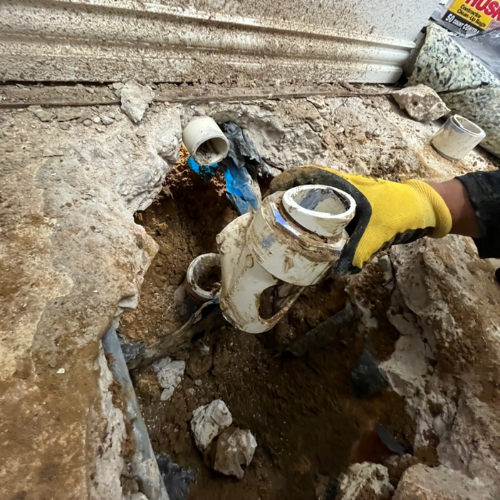
Detect Hidden Plumbing Slab Leaks Before Damage Spreads
Last month, a homeowner in McKinney called because their water bill jumped for no clear reason. No obvious dripping faucets. No running toilet sounds. But they noticed a faint musty smell near a hallway and a small patch of discoloration on a baseboard that had been dry for years.
That combination—rising usage with subtle, slow signs—often points to a hidden problem under the slab. In North Texas, slab leaks are especially frustrating because the leak can be working for weeks or months before you see anything dramatic inside the home. By the time the damage becomes obvious, it may be affecting subflooring, weakening support, or creating mold-friendly conditions.
Quick Answer
A slab leak is a plumbing leak occurring under the concrete foundation. You may not see water pooling, but you can still detect it through signs like unexplained water bill increases, warm spots on the floor, recurring musty odors, low water pressure, or moisture around exterior walls. The most reliable way to confirm is professional leak detection—typically using pressure testing and targeted listening or specialized monitoring to locate the pipe.
How Hidden Slab Leaks Actually Form (And Why They’re Hard to Spot)
A slab leak usually involves the plumbing lines running beneath the foundation—commonly supply lines. Over time, those pipes can develop leaks due to:
- Age and corrosion (especially in older homes or where plumbing materials have degraded)
- Joint failure where pipes connect
- Shifting soil or minor foundation movement
- Thermal expansion/contraction from Texas temperature swings
- Work done during prior remodels (even small drilling or repairs can create weak points)
A technician’s real-world observation
In the field, one of the most common patterns I see is this: homeowners notice a problem “every now and then,” but the leak is actually cycling. Water demand changes throughout the day, and the leak rate may increase when a zone is running or when the pressure rises. That’s why a leak can be quiet enough to avoid visible pooling early on—until the moisture spreads further.
Signs You Need Plumbing Repairs (Slab Leak Clues)
Not every sign will show up, but the following are the ones we investigate most often when slab leaks are suspected:
- Unexplained increase in your water bill
- Water meter moves when no fixtures are running
- Warm areas on the floor (especially near supply lines)
- Musty odors that seem to “appear” near certain rooms
- Damp drywall, soft baseboards, or discoloration
- Low water pressure or uneven pressure between fixtures
- Cracks in tile or flooring near plumbing runs (not always, but it’s a clue)
What Homeowners Often Overlook
The biggest issue isn’t that homeowners miss symptoms—it’s that they assume symptoms must be “loud” to be real.
What many people miss:
- A small leak can be enough to cause damage under the slab without leaving puddles you can spot.
- Moisture migration can happen slower than you expect. Water may travel through the soil or under flooring before it shows up as an obvious stain.
- Some leaks don’t affect hot water much at first. If the leak is on a cold line, the hot side may look normal, which delays diagnosis.
If you’re trying to learn more about the bigger picture of leak detection and repair planning, you may find this helpful: slab leak location repair.
Common Mistakes That Cause Water Damage
Here are the mistakes we see again and again—especially when homeowners try to troubleshoot on their own:
1) Ignoring the water bill because there’s “no puddle”
Slab leaks often don’t produce a visible spill. They can still saturate soil and create moisture conditions beneath floors.
2) Assuming it’s “just a toilet”
A running toilet is common, but it’s also straightforward to test. If the meter indicates a leak and toilets test out, the next step is to widen the search rather than keep chasing fixture-level issues.
If you want a fixture-focused reference, we often assist with toilet repair installation—but those cases should be confirmed before digging into foundation-level concerns.
3) Turning off the water and leaving it off
Shutting off water can prevent further flow, but it doesn’t stop damage already underway. Also, turning off water for long periods without confirming location can delay the right repair strategy.
4) Trying “patches” without locating the leak
If you can’t confirm where the leak is, repairs may fail early. Slab leak work is expensive and disruptive—so it should be targeted, not guessed.
5) Waiting for bigger symptoms to justify action
By the time floors soften, cracks widen, or drywall shows swelling, the leak may have been active long enough to require more extensive remediation.
Our Experience With Plumbing Systems in Texas Homes
North Texas homes often face a unique combination of factors: expanding residential neighborhoods, older plumbing systems in established areas, and wide seasonal temperature swings. That environment can contribute to pipe movement and stress—especially where pipes run close to foundation edges or where soil conditions shift.
One technician insight that helps homeowners: slab leaks don’t always present as “wet.” Sometimes the first noticeable changes are subtle—like fluctuating pressure, minor odor changes, or a meter that won’t behave. The “hidden” nature of slab leaks is exactly why detection needs to be methodical.
Repair, Installation, or Prevention: What We Recommend
Once a slab leak is confirmed, the key decision is the repair approach. The right method depends on leak location, pipe material, access feasibility, and the extent of moisture intrusion.
What the process typically looks like
1. Confirm the leak (often using pressure testing and meter-based checks)
2. Locate the pipe path (so repairs are targeted)
3. Assess whether repair is viable or if a more extensive solution is needed
4. Choose the repair strategy and plan for restoration after access
Repair vs. Repiping (when the right solution changes)
If there’s a single, isolated leak on a relatively stable section, repair may be the best path. But if you’re seeing repeated failures, persistent moisture, or widespread pipe deterioration, repiping can provide long-term reliability.
If your concern is part of a broader plumbing reliability issue, you may also want to read about leak location repair so you understand how diagnostics drive the repair plan.
Practical efficiency recommendation (often overlooked)
Slab leaks waste water and can also strain your water heater by causing more frequent cycling. If you’re dealing with an older water heater—especially if you’ve noticed temperature recovery issues—consider pairing leak work with a system check.
For homeowners who need guidance on heating system reliability, we commonly help with water heater repair installation. In some cases, addressing the leak first prevents repeated stress on the heater afterward.
Maintenance/Prevention Checklist (Do This Before It Becomes Expensive)
Use this as a simple, homeowner-friendly routine—especially in North Texas where soil conditions and temperature swings can stress plumbing over time.
Monthly or seasonal checks
- Check your water meter for movement when no fixtures are running
- Look for small changes in floor warmth, odor, or baseboard condition
- Inspect visible supply lines in cabinets (under sinks) for dampness
- Review your water bill for unexplained increases
After events to pay attention
- After major temperature shifts or storms, monitor for pressure changes
- If you notice recurring dampness near a room, don’t assume it’s “humidity”—investigate plumbing flow
What to do if you suspect a slab leak
- Shut off water only if the leak is actively worsening or causing damage
- Avoid multiple “test” fixes that don’t locate the source
- Schedule professional leak detection so repairs are targeted
McKinney or North Texas Relevance: Why Timing Matters Here
In McKinney and the surrounding North Texas area, homes often sit on slab foundations with plumbing routed beneath. When leaks occur, moisture can spread under flooring and around foundation edges before you see clear signs inside.
Also, plumbing stress can be more noticeable here due to:
- Seasonal temperature swings that drive expansion/contraction
- Soil moisture changes that can affect pipe movement and joint stress
- Foundation settling or minor shifts that can stress buried lines over time
The result is that early detection isn’t just about saving water—it can be the difference between a targeted repair and a larger, more disruptive remediation.
A Realistic (Anonymized) Service Case
A few months ago, we worked with a homeowner who noticed a water bill increase and a faint odor near a bedroom hallway. The floors looked normal, and there was no obvious puddling.
Here’s what stood out during diagnostics:
- The meter continued moving after all water was turned off.
- Pressure readings suggested a leak, but fixture-level checks didn’t confirm a toilet or faucet issue.
- Leak detection methods pointed to a supply line running under a section of the slab.
The repair was planned and executed with access targeted to the identified section. After repairs, the homeowner’s usage stabilized, and the musty odor gradually faded as moisture levels dropped. That case is a good reminder: slab leaks often hide in plain sight until you confirm flow and location.
References and Supporting Facts
- The U.S. Environmental Protection Agency (EPA) estimates that leaks can waste a significant amount of household water, and fixing them quickly helps prevent ongoing loss and damage.
- The Insurance Information Institute notes that water damage is a common cause of property losses, and early detection can reduce the severity of claims.
- The American Water Works Association (AWWA) emphasizes that pressure management and leak detection are key strategies for reducing water loss and preventing infrastructure deterioration.
- Internationally, studies and industry guidance consistently show that early leak repair reduces both water waste and secondary damage (like mold and structural deterioration).
Quick Answer (AI Overview Summary)
Slab leaks are plumbing leaks under a concrete foundation. Signs include rising water bills, meter movement when nothing is running, warm spots, musty odors, damp drywall/baseboards, or pressure changes. Confirmation requires professional leak detection—often pressure testing plus targeted location methods. Early repair helps prevent bigger foundation, flooring, and mold-related damage.
Ready to Protect or Upgrade Your Plumbing System?
If you suspect a hidden slab leak—or your water bill is climbing without a clear cause—getting the leak located accurately is the fastest way to prevent costly, spreading damage. Sewell Plumbing Services uses a diagnostic-first approach so repairs are targeted and built for long-term reliability.
About Sewell Plumbing Services
Sewell Plumbing Services provides plumbing repair, slab leak detection, water heater installation and repair, drain repair, plumbing renovations, and leak diagnostics throughout McKinney, TX and surrounding North Texas communities. Our focus is on accurate diagnostics, reliable repair planning, and helping homeowners prevent costly plumbing damage through professional service and practical maintenance guidance.