
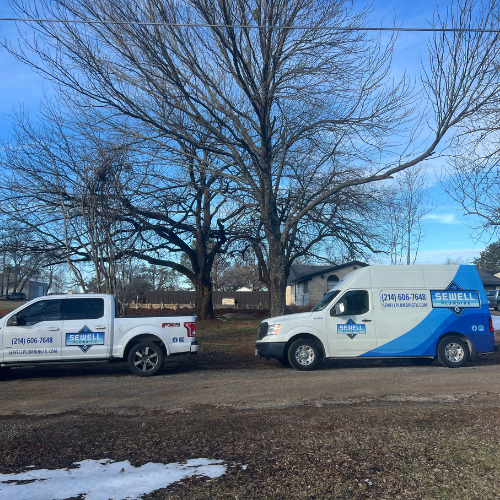
Pressure-Tested Plumbing Slab Leaks, Confident Repairs
Last winter, a McKinney homeowner called because their water bill jumped steadily for three months. No puddles showed up in the yard, and the floors looked fine—until the kitchen wall started to feel slightly damp near the baseboard after a few hot showers. That combination (higher usage + subtle moisture) is exactly what we look for with suspected slab leaks: the water can travel under flooring or along the underside of the slab long before it’s obvious inside the home.
In North Texas, slab foundations are common, and the region’s seasonal temperature swings can make expansion and contraction harder on older plumbing. When a leak is hidden, homeowners often try to “wait it out.” Unfortunately, that can turn a manageable repair into foundation-damaging moisture and more expensive work.
Quick Answer
A plumbing slab leak is best confirmed with proper leak detection—not by guesswork. We typically pressure-test the suspected line(s), verify water flow patterns, and then locate the exact path of moisture before repairing. If you’re seeing unexplained water use, damp drywall/floors, low water pressure, or warm spots along tile/laminate, it’s time for a professional slab leak location and repair plan.
How We Handle Slab Leaks: Pressure Testing With a Purpose
Slab leaks are tricky because the “evidence” is often indirect. The water doesn’t have to pool on top of the slab to cause damage—it can seep into the slab, travel along the plumbing route, and show up later as dampness, odors, or floor movement.
What a pressure test actually tells us
When we pressure-test, we’re looking for a pressure drop over time. That drop indicates a loss in the system—meaning water is escaping somewhere between where we pressurize and where the line routes under the slab.
A confident slab leak repair starts with good questions and clean isolation:
- Is the leak active now or intermittent? (Some leaks worsen with pressure changes.)
- Which circuit is it likely affecting? (Kitchen/bath plumbing loads can help narrow the zone.)
- Is there a chance it’s a fixture/valve leak on the surface? (We rule that out first.)
- Does the pressure behavior match a line leak or a different issue? (We don’t assume.)
A firsthand technician observation we see often
One of the most common “false leads” I see is homeowners detecting moisture but not knowing where it’s coming from. In several North Texas homes, moisture near a wall base turns out not to be from exterior plumbing or roof leaks—it’s from a line running behind that wall under the slab. The moisture pattern can lag behind the leak location, so the fix has to be based on where the water is actually escaping, not where it first shows up.
If you want to understand the process from a homeowner perspective, this guide pairs well with your next steps: slab leak location repair.
Signs You Need Plumbing Repairs (Especially for Slab Leaks)
Slab leaks don’t always announce themselves with puddles. Watch for these patterns:
- Unexplained water bill increases (often gradual)
- Warm spots on tile, laminate, or carpeted areas
- Damp drywall or musty odors in a specific room
- Cracks that appear or widen near plumbing-heavy areas
- Low water pressure that comes and goes
- Water on the floor after showers even though there’s no visible dripping fixture
A realistic service case (anonymized)
A couple in the McKinney area noticed their hot water used to “arrive quickly,” but then it started taking longer—along with a monthly spike in usage. They also saw a faint humidity smell near the hall bathroom. We performed a pressure test to isolate the affected plumbing section, then confirmed the leak path under the slab. The repair wasn’t just about stopping flow—it was about restoring system integrity so they wouldn’t keep losing water invisibly.
What Homeowners Often Overlook
Hidden leaks are one of the biggest “silent cost” problems in homes with slab foundations. Here are the oversights we run into most:
1) Assuming a leak must be visible to be real
Many slab leaks are slow enough that floors and walls don’t flood. The moisture can be absorbed into materials, which delays the obvious signs.
2) Waiting for “bigger symptoms”
The longer a leak runs, the more material it can saturate. By the time you see cracking or noticeable dampness, the plumbing repair may need to be expanded to address moisture damage.
3) Treating the symptom, not the source
If you only replace a faucet cartridge or tighten a visible connection while a separate line under the slab is leaking, your water loss continues.
4) DIY “patching” under pressure
Temporary fixes can fail quickly under slab conditions. Also, some sealants can complicate future diagnostics by changing how pressure behaves in the line.
Common Mistakes That Cause Water Damage
Here’s what we most commonly see lead to bigger repairs:
- Ignoring meter movement after hours of “no visible leaks”
- Resetting toilets or replacing fill valves repeatedly without checking the rest of the supply system
- Using stop-leak products that mask symptoms but don’t locate the leak
- Overlooking irrigation/common water use when tracking bills (especially during seasonal changes)
- Not documenting when symptoms change (slab leaks often correlate with shower cycles, laundry, or water pressure spikes)
These mistakes aren’t about homeowner intent—they’re about limited information. That’s why we focus on confirmation: pressure-tested plumbing slab leak diagnostics before any repair commitment.
Repair, Upgrade, or Replacement: What We Recommend After Location
Once we locate the leak, the next decision is about the right repair approach and how to prevent recurrence.
Repair approach: the goal is to stop water loss and stabilize the system
Depending on the leak’s location, access, and pipe condition, repairs may include targeted pipe repair or pipe replacement within the affected run.
If your leak suspicion is broader than one area, you may find this helpful: leak location repair. It covers how we confirm whether the issue is in the slab, behind walls, or from a surface component.
Efficiency recommendation that often pairs with slab repairs
If the leak involves hot-water plumbing or your system is aging, it’s a good time to evaluate the water heater setup. In older homes, we frequently see mineral buildup and reduced performance that can worsen hot-water demand and increase operating stress.
For homeowners considering upgrades, we can help with:
- water heater repair installation
- tankless water heater repair installation
When an upgrade makes sense
A slab leak repair is a high-value moment to address long-term reliability. If your water heater is nearing the end of its service life, or if you’re dealing with hard-water scaling, upgrading the system (or adding proper maintenance) can reduce future service calls.
Plumbing Maintenance Checklist (Prevention Without Guesswork)
You don’t have to be a plumber to reduce risk. Use this checklist to catch problems early:
- Monthly meter check: after water use stops for the night, confirm the meter isn’t still moving
- Watch for pressure changes: sudden low pressure can indicate an active leak or failing valve
- Inspect high-risk areas: bathroom/kitchen lines under baseboards and near interior walls
- Track water heater performance: inconsistent hot water can signal buildup or failing components
- Flush drain lines when needed: slow drains can indicate buildup that stresses the system
- Know your “backup signs”: repeated drain clogs often mean more than a single blockage
If you’re also dealing with drain issues, pairing leak diagnostics with drain service can prevent overlapping problems. For example, this resource can help: drain repair installation.
McKinney & North Texas Relevance: Why Hidden Leaks Get Worse Here
In McKinney and surrounding North Texas communities, slab foundations and busy residential plumbing loads go hand-in-hand. A few local factors make early detection especially valuable:
- Temperature swings can contribute to pipe movement and stress on older joints
- Hard-water conditions can increase scaling inside pipes, making leaks more likely over time
- Seasonal water use patterns can mask leaks (irrigation cycles and household routines change throughout the year)
- Foundation movement concerns are more sensitive when moisture is involved, especially near plumbing-heavy areas
We’ve found that homeowners who act quickly—before visible damage appears—often avoid the “second problem” of repairing the leak plus remediation of saturated materials.
When Repairs Fail Early: The Lessons We Apply
Some slab leak repairs don’t last—not because the plumber “did it wrong,” but because the diagnosis wasn’t complete or the underlying conditions weren’t accounted for. Repairs fail early when:
- the leak isn’t isolated correctly,
- the pressure test doesn’t reflect real-world water use conditions,
- the repair targets the wrong run,
- or the surrounding pipe environment is already compromised.
That’s why we treat leak location as the foundation of the job. A repair without confirmation is guesswork. Confirmation leads to confident repairs.
Ready to Protect or Upgrade Your Plumbing System?
If you’re seeing unexplained water use, dampness near walls, or warm spots on floors, don’t wait for the damage to become obvious. Early, pressure-tested diagnosis helps keep repairs targeted—and protects the structure beneath your home.
About Sewell Plumbing Services
Sewell Plumbing Services provides plumbing repair, slab leak detection, water heater installation, drain repair, plumbing renovations, and leak diagnostics throughout McKinney, TX and surrounding North Texas communities. The company focuses on reliable plumbing solutions, accurate diagnostics, long-term system performance, and helping homeowners prevent costly plumbing damage through professional service and maintenance.
FAQ
How do I know if I have a slab leak?
Start with indirect signs: a rising water bill, meter movement when no water is running, damp drywall/baseboards, musty odors, or warm spots on floors. A professional will confirm using pressure testing and isolation steps so the repair targets the exact leak path.
Should I repair or replace my plumbing line after a slab leak?
Often, targeted repair is the right choice—especially when the pipe section is accessible and the rest of the line is in good condition. If the surrounding piping is corroded or repeatedly fails, pipe replacement may provide better long-term reliability.
Can I use a “stop leak” product to fix a slab leak?
We generally don’t recommend it. These products can mask symptoms without locating the leak, and they may make future diagnostics harder. A proper pressure-tested repair is the safer route.
What’s the difference between locating a leak and “guessing”?
Leak location uses isolation and pressure testing to determine whether water is escaping in a specific section and how it behaves over time. Guessing usually leads to wasted labor and incomplete fixes.
Could a slab leak be connected to my water heater issues?
Yes—especially if the leak involves hot-water lines. Also, if your water heater is aging, hard water may contribute to scaling and performance problems. We can evaluate both so you’re not fixing one problem while another silently worsens.