
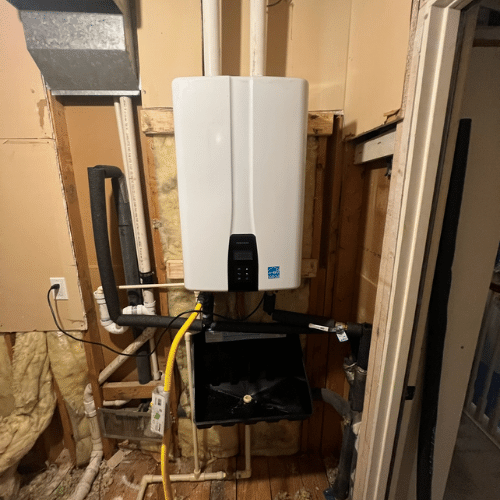
Water Heater Repair for Leaks, Rust, and Fluctuations
Last winter, a homeowner in McKinney called after noticing two things at once: the water in the kitchen sink would swing from hot to lukewarm, and there was a faint dampness around the base of the water heater. The real issue wasn’t “just a drip.” When water heaters start leaking and temperature control becomes erratic, it usually points to failing components inside the tank—or corrosion that’s already progressed.
In North Texas homes, especially where water chemistry is harder and temperature swings are more noticeable through the seasons, water heaters can show early warning signs that many homeowners miss. If you’re seeing leaks, rust stains, or inconsistent hot water, acting sooner can prevent damage to floors, closets, and nearby plumbing lines.
Quick Answer
If your water heater is leaking, producing rusty water, or causing hot-water temperature fluctuations, it’s typically time for an inspection. Small drips can become tank failure, and temperature swings often mean the thermostat, heating element/burner, dip tube, or mixing valve is struggling. Repairs may be possible, but if the tank is heavily corroded or the leak is from the tank itself, replacement is often the safer long-term choice.
What We Commonly See With Leaks, Rust, and Temperature Fluctuations
1) Leaks: where the water is coming from matters
A common misconception is that “a leak is a leak.” In practice, the source changes everything:
- Leak at the drain valve or fittings: Often repairable (or a valve/fitting replacement), especially if there’s no evidence the tank is failing.
- Water around the base that looks like condensation: Sometimes it’s just humidity/venting or minor sweating—though it still deserves a check.
- Rust trails running down the tank: That usually indicates the tank is corroding and the leak may be structural.
- Water pooling near the connections: Could be a supply line issue, pressure issue, or a failing connection—not necessarily the tank.
2) Rust: not just “dirty water”
Rust can show up from a few different places:
- Corroded tank interior: Sediment builds up over time, the tank walls thin, and rust flakes get into the hot water.
- Anode rod failure: Many tanks rely on an anode rod to protect the tank from corrosion. When that rod is spent, the tank corrodes faster.
- Supply line contamination: Less common, but rust can also come from upstream plumbing.
If you’re noticing brown or orange hot water, plan on a deeper inspection rather than repeatedly flushing the tank. Flushing can help sediment, but it can’t reverse tank corrosion.
3) Fluctuations: temperature swings usually point to control or mixing
Inconsistent hot water—especially sudden drops or alternating hot/cold—often comes from one of these:
- Thermostat issues (electric water heaters) or burner/thermostat control (gas)
- Failing heating element(s) (electric models) or ignition/burner problems (gas)
- Dip tube wear (common on many tanks): cold water can mix into the hot side if the dip tube breaks down
- Sediment buildup: reduces heat transfer and causes “short cycling” behavior where water doesn’t heat predictably
- Pressure/flow changes: if another fixture is running (laundry, dishwasher), the heater may not recover smoothly
A firsthand technician observation
When we inspect heaters with temperature swings, we often find that the unit “tests okay” at a glance. The thermostat may read within range, and there may be no obvious error code. But after we check temperature rise, recovery behavior, and look at sediment patterns, the real story becomes clear: sediment blankets the heating surface or the control isn’t maintaining stable heat transfer. That’s why homeowners sometimes report, “It’s hot sometimes, then suddenly not,” even when the tank seems to be working.
Common Mistakes That Cause Water Damage
Mistake 1: Waiting until the leak becomes visible damage
A small damp ring can turn into warped flooring, rotted drywall, or damage to nearby shutoff valves. By the time the leak is obvious, the heater may have already lost structural integrity.
Mistake 2: Assuming rust means “just flush it”
Flushing can reduce sediment, but if rust is coming from the tank wall or anode rod failure, repeated flushing may only delay the inevitable. If you’re already getting rusty water, the tank condition needs evaluation—not just maintenance.
Mistake 3: Turning the thermostat up to “fix” fluctuations
Raising temperature settings can create other problems:
- increased risk of scalding
- higher energy bills
- pressure/expansion stress
- faster corrosion in some failure scenarios
A stable system comes from correct diagnosis, not guessing.
Mistake 4: Ignoring expansion/pressure-related symptoms
If the heater and plumbing are seeing abnormal pressure, the relief valve may weep and water may show up at unexpected times. This can be tied to a failing pressure regulator or expansion tank issues (in homes that have them).
Repair, Installation, or Prevention: What to Do Next
Step-by-step: how we approach water heater diagnostics
A reliable repair starts with identifying the problem category:
1. Confirm leak source
- Check fittings and drain valve area
- Inspect the tank exterior for corrosion patterns
- Verify venting/condensation if applicable
2. Assess water quality and sediment
- Look for rust in hot water
- Evaluate signs of sediment buildup
3. Test temperature control and heating performance
- Electric: element/thermostat checks
- Gas: burner/ignition/combustion control checks
4. Review safety controls
- Relief valve behavior
- Proper operation of shutoffs and connections
What’s typically worth repairing
Repairs are often a good fit if:
- the leak is from a fitting, valve, or connection, not the tank body
- rust is minimal and the tank condition looks salvageable
- temperature problems trace to a thermostat, heating element, or control component
- the heater is relatively new and well maintained
When replacement is usually the smarter move
Replacement is typically recommended if:
- the tank is leaking from a corroded seam or bottom
- rust is persistent and indicates internal corrosion
- the heater is repeatedly cycling or struggling to recover
- repairs would require multiple components while the tank is near end-of-life
Efficiency recommendation: consider a better match for your home’s demand
If your household has shifting hot-water usage (kids’ schedules, frequent showers, laundry timing), upgrading can improve performance:
- more stable temperature control
- better recovery
- improved insulation and efficiency
For homes that want modern upgrades, we also support new installations and system changes through our water heater repair and installation services.
If you’re considering upgrading to a tankless system, we can help with tankless water heater repair installation—especially when temperature fluctuations are tied to inadequate sizing, maintenance needs, or performance issues.
An example service case (anonymized)
A homeowner in North Texas noticed the hot water on the second floor would turn lukewarm during peak use. The unit also had faint rust-colored staining near the lower section. We inspected and found sediment buildup impacting heat transfer and evidence the tank was internally corroding. The leak wasn’t coming from a connection—it was tied to tank failure. Repairing the temperature controls would’ve been a short-term fix, so we recommended replacement. After installation, hot-water recovery improved and the temperature swings stopped because the underlying performance limitation was resolved at the source.
Plumbing Maintenance Checklist (Prevention That Actually Helps)
Here’s a practical checklist you can use between service calls:
- Inspect for moisture monthly around the base, drain valve, and nearby fittings.
- Check hot-water color: clear vs. rusty/brown.
- Listen for unusual operation (banging, rumbling, frequent cycling).
- Test temperature stability: does hot water stay consistent when other fixtures run?
- Confirm proper venting (gas units) and no blockage signs.
- Schedule periodic maintenance—especially if you have hard water or notice sediment symptoms.
- Keep the area around the heater dry and accessible (for safety and service access).
- Know your shutoff locations and ensure you can isolate the heater if needed.
If your heater is part of a larger plumbing system with recurring clogs or drainage issues, sediment and pressure problems can overlap. When drains start backing up, it’s often worth addressing the related plumbing system too. Our team can help with drain repair and installation when backups suggest a damaged line or failing components.
McKinney / North Texas Relevance: Why These Problems Show Up Here
In McKinney and across North Texas, many homeowners deal with:
- hard water that increases mineral buildup inside water heaters
- seasonal temperature swings that affect recovery performance and usage patterns
- older plumbing components in established neighborhoods
- foundation and slab movement concerns in some homes, where hidden moisture becomes a bigger issue over time
One technician insight we see often: when a water heater leak goes unnoticed, it can mimic other leak types. For example, a damp area near the heater can be mistaken for a plumbing line issue—or worse, homeowners may ignore it because they assume “it’s just condensation.” Meanwhile, moisture can travel along paths and eventually create broader water damage. If you suspect the leak is related to deeper plumbing issues, it’s worth getting accurate water, sewer, and gas diagnostics so the source is verified rather than guessed.
What Homeowners Should Know (Repair vs. Replacement)
Quick comparison
| Situation | Repair is usually the best option | Replacement is usually the best option |
|---|---|---|
| Leak location | Fittings/valves/connections | Tank seam, bottom, or major tank corrosion |
| Rust in hot water | Minimal staining; control components failing | Persistent rusty water indicating internal corrosion |
| Temperature fluctuations | Thermostat/element/burner control issue | Sediment-heavy tank or failing internal components |
| Age and condition | Relatively new and well maintained | Near end-of-life or repeated failures |
Key takeaway
If the tank is corroding, repairing parts may reduce symptoms briefly—but it won’t stop the underlying deterioration. Diagnosing the leak source and internal condition is what determines whether repair is truly “repair,” or just postponing a bigger problem.
Signs You Need Plumbing Repairs
If any of these sound familiar, schedule an inspection:
- Water puddles or dampness near the heater that returns
- Rust-colored hot water, even intermittently
- Hot water that changes temperature without adjusting fixtures
- New noises (rumbling/banging) that weren’t there before
- Relief valve dripping or recurring water around the heater
FAQ
How do I know if my water heater leak is serious?
If the wet area keeps returning after you dry it off, or if you see rust trails and moisture near the tank seam or bottom, it’s usually more serious than a loose fitting. A leak at a drain valve or connection can sometimes be repaired quickly, but a leak from the tank body often indicates corrosion and tank failure risk. The safest approach is to identify the exact source during inspection.
Should I flush my water heater if I’m seeing rust?
Flushing can help with sediment, but rust in hot water can also come from tank corrosion. If you’re already getting rusty water, flushing alone may not fix the underlying issue. A technician should inspect the tank condition and heating performance to determine whether maintenance is enough or replacement is the better path.
Why does my hot water fluctuate when someone turns on another faucet?
That pattern often points to temperature control and recovery limits, sediment buildup, or mixing behavior. Pressure and flow changes when fixtures run can reveal weak heating performance. Gas burners/electric elements and thermostats can also struggle to maintain stable temperature under fluctuating demand.
Is it cheaper to repair an old water heater?
Sometimes repair is the right move—especially with leaks from fittings/valves or faulty controls. But if the tank is corroding, you may pay for multiple repairs while the heater continues to fail. A clear diagnosis helps you compare the cost of repairs versus replacement based on the heater’s condition, not just the symptom.
Ready to Protect or Upgrade Your Plumbing System?
Leaks, rust, and temperature fluctuations don’t just affect comfort—they can lead to water damage and higher energy costs if the root cause is ignored. If you want dependable diagnostics and repair recommendations tailored to your heater’s condition, Sewell Plumbing Services can help you move from uncertainty to a real solution—before the problem spreads.
About Sewell Plumbing Services
Sewell Plumbing Services provides plumbing repair, slab leak detection, water heater installation, drain repair, plumbing renovations, and leak diagnostics throughout McKinney, TX and surrounding North Texas communities. The company focuses on accurate diagnostics, long-term system performance, and helping homeowners prevent costly plumbing damage through practical repairs and maintenance guidance.