
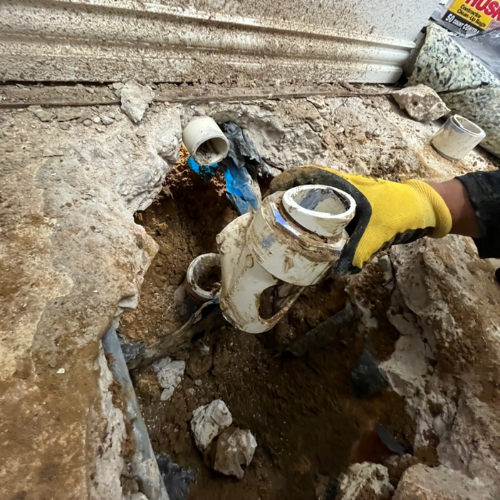
Slab Leak Detection and Repair for Peace of Mind
A few months ago, a homeowner in McKinney called us because their monthly water bill jumped noticeably—without any obvious dripping faucets or running toilets. The interesting part was that everything looked fine inside the house. No wet spots on the ceiling, no puddles, and the floors were dry to the touch.
Still, the numbers didn’t lie. After we ran a proper leak test and scoped key areas, we confirmed what many homeowners fear most: water was escaping underground, beneath the slab, and it was starting to affect the surrounding soil—an issue that can quietly grow into foundation damage if it’s left alone.
If you’re seeing unexplained water use, dampness near exterior walls, or recurring “mystery” moisture, slab leak detection isn’t something to postpone. In North Texas homes—especially those with slab foundations—early detection is often the difference between a targeted repair and a much bigger, more disruptive problem.
Quick Answer
Slab leaks typically don’t announce themselves like a visible pipe break. The most reliable way to find one is through a combination of water pressure testing, meter-based leak detection, and targeted acoustic or electronic location methods. Repair depends on where the leak is and how accessible the piping is—options can include direct repair where feasible or more extensive work when piping sections must be replaced. If you suspect a slab leak, don’t rely on dye tests or “wait and see.” Get a professional diagnostic so you can stop the leak before it impacts the foundation.
How Slab Leaks Happen (and Why They’re Hard to Spot)
In a slab foundation home, plumbing lines for showers, sinks, toilets, and in some cases irrigation or exterior feeds run through concrete and beneath the living space. Over time, leaks can develop due to:
- Pipe corrosion (older galvanized lines, or certain conditions that accelerate deterioration)
- Shifting soil or settlement that stresses joints and fittings
- Freeze/thaw cycles (rare in Texas compared to northern climates, but brief cold snaps can still stress exposed sections or vulnerable joints)
- Work during a remodel that unintentionally affects plumbing runs
- Wear at connections—it’s often not the pipe body that fails first, but the fittings
A firsthand technician observation we see often
When we start leak detection, many homeowners assume the leak must be loud or obvious. But on slabs, the leak can be quiet—water may escape at a slow rate and travel through the surrounding soil before it ever shows as a puddle. That’s why water bills matter: the plumbing system can be losing water under your feet while the inside of the home stays “dry” for a long time.
If you want a more general overview of how we locate and handle leaks, you can also review leak location repair for the diagnostic approach we use across different leak types.
Signs You May Need Slab Leak Detection
Slab leaks vary by size and location, but these are the clues that should get your attention:
- Higher-than-usual water bills with normal household use
- Moisture or dampness near baseboards, exterior walls, or garage floors
- Cracks in drywall or gaps that seem to widen over time
- Musty odors (sometimes from moisture trapped in the slab area)
- Floor warmth changes in certain rooms (hot water lines can leave subtle patterns)
- Reduced water pressure or irregular pressure changes
- Sound of running water when everything is turned off (not all leaks make noise, but some do)
Quick diagnostic tip homeowners can do today
Try this simple check before calling: shut off all water inside the home and watch the water meter. If the meter continues to move after a period of time, you likely have ongoing water use somewhere—leak, irrigation, or toilet/fixture issue. That doesn’t confirm a slab leak by itself, but it’s a useful first step.
What Homeowners Often Overlook
A slab leak can be tempting to “guess” at. Here are the oversights we run into most often:
- Only checking visible fixtures (toilets, faucets) while ignoring hidden underground lines
- Assuming a leak must be constant—some slab leaks are intermittent, especially around pressure fluctuations
- Waiting for obvious damage because the house looks fine today
- Using homeowner “patches” on exposed areas without addressing the source
- Confusing condensation with a leak (especially around bathrooms and exterior-facing walls)
Common Mistakes That Cause Water Damage
Slab leaks don’t just waste water—they can undermine the ground under your foundation. The most damaging mistakes tend to be “small delays” and “partial fixes.”
Common mistake homeowners make
Believing that a dye test or toilet check rules out a slab leak.
Many homeowners will test a toilet, fix a flapper issue, or even replace a fill valve—then the bill stays high. Here’s why that happens: toilets can contribute to water loss, but they don’t explain moisture under a slab or water usage that continues after toilets and fixtures are confirmed as normal. In other words, a toilet can be a symptom and a slab leak can be the real cause elsewhere.
Other repair mistakes we see
- Turning off water repeatedly instead of locating the leak (you lose diagnostic clarity)
- Relying on “wetness” alone (by the time moisture is obvious, damage may already be underway)
- Letting irrigation run during leak tests and muddying results
- Repairing after the leak has been active for months—the longer the leak continues, the more likely the repair footprint expands
Slab Leak Detection: What Professionals Actually Do
A quality slab leak diagnosis is methodical. The goal isn’t just to confirm “there’s a leak,” but to pinpoint the location and identify the likely piping route so the repair is efficient.
Here’s the typical process we follow:
1. Water meter and leak load assessment
- We compare meter movement with household water activity.
2. Pressure testing
- We check how the system holds pressure and where it indicates loss.
3. Zone isolation
- We isolate different areas to determine whether the leak is on hot or cold lines and narrow the affected section.
4. Electronic/acoustic location methods
- Depending on your plumbing layout and symptoms, we use tools designed to help “listen” for leaks within the slab.
5. Targeted inspection/scoping
- When appropriate, we confirm suspected areas and plan the least disruptive route to repair.
If you already know you’re dealing with slab leaks and want the specific details of our approach, explore slab leak location repair for a more focused look at what to expect.
Repair Options and the Recommendation That Fits Your Situation
Once the leak is located, the repair strategy is chosen based on accessibility, pipe material, and the condition of nearby lines.
Common repair paths
- Direct repair when the leak location is accessible and the pipe segment can be corrected without excessive demolition.
- Pipe replacement for sections that are corroded or damaged beyond a simple fix.
- Joint and fitting replacement if the failure is at a connection point.
- Repiping considerations if repeated failures indicate wider system wear.
An anonymized service case (realistic example)
A North Texas homeowner noticed a recurring increase in usage over several billing cycles. They had already replaced a toilet component, but the meter still showed unexplained movement. We isolated zones and confirmed a leak on the hot water side beneath the slab. During repair planning, we found that nearby hot water connections showed signs of age-related deterioration. Rather than doing a tiny patch only, we recommended replacing the affected hot water segment to reduce the chance of another failure shortly afterward. The repair stopped the leak and stabilized the water bill, and the homeowner avoided another round of excavation later.
Repair vs. Replacement: When It Makes Sense to Upgrade
It’s common for homeowners to ask whether they should repair the leak only or consider upgrading related plumbing components while the system is open.
A smart upgrade recommendation often depends on what we find during diagnostics and repair:
- If the leak is on aging piping with multiple weak points, a localized replacement may be the most practical choice.
- If your system has widespread corrosion, it may be time to discuss broader solutions—sometimes even repiping services.
If your slab leak involves hot water lines and you’re also dealing with aging water heating, it can be efficient to review your water heater at the same time. For example, if you’re experiencing inconsistent hot water or frequent cycling, you may benefit from water heater repair and installation guidance tailored to your home.
What Actually Improves Long-Term Plumbing Reliability
Slab leaks often repeat when the underlying cause isn’t fully addressed. Long-term reliability comes from choosing the right repair method and considering the system’s broader condition.
Here are the improvements we commonly recommend after slab leak repairs:
- Replace compromised pipe sections, not just the leaking point
- Use appropriate fittings and materials for your plumbing layout and local conditions
- Reassess pressure regulation if the home experiences pressure spikes
- Coordinate repairs with planned renovations so you minimize future disruption
If you’re planning a remodel, it’s worth aligning repair timing with renovation timelines. Many homeowners contact us for pre-listing home renovations and want slab leak repair handled before photos and inspections—so issues don’t become negotiation points later.
Plumbing Maintenance Checklist (Prevention Starts With Small Habits)
You can’t prevent every slab leak, but you can reduce the odds of one becoming severe and catch issues earlier.
Slab leak prevention & early detection checklist
- [ ] Check your water meter monthly (or after a bill jump)
- [ ] Look for recurring moisture near exterior walls, baseboards, or garage slab edges
- [ ] Monitor water pressure—sudden changes can indicate problems
- [ ] Watch for “silent” toilet issues (dye test periodically, especially after repairs)
- [ ] Insulate vulnerable plumbing during brief cold snaps
- [ ] Avoid flushing non-biodegradable items that can create downstream drainage issues
- [ ] If you have a history of leaks, schedule a professional inspection before major seasonal swings
This checklist is especially useful in North Texas where neighborhoods grow quickly and many homes share similar slab foundation construction—meaning plumbing layouts can be similar, and early detection patterns can look familiar.
McKinney or North Texas Relevance: Why This Matters Here
McKinney homes often sit on slab foundations designed for convenience and stability. Over the years, however, plumbing runs under the slab can be affected by:
- Seasonal temperature swings that stress vulnerable sections
- Soil expansion and movement that can stress joints
- Aging infrastructure in established neighborhoods where plumbing materials have reached end-of-life
- Expanding residential development that increases the likelihood of older plumbing systems being modified during renovations
When slab leaks go undetected, water loss can contribute to soil saturation under and around the foundation. That’s why homeowners should act quickly once they see consistent signs—especially unexplained water usage.
Quick Answer: What to Do If You Suspect a Slab Leak
Key Takeaway
If your water bill is rising and you can’t find the cause with normal fixture checks, slab leak detection is the next step—because waiting usually increases repair complexity.
FAQ
How do I know if I have a slab leak?
Most homeowners first notice a rising water bill, intermittent moisture, or cracks that don’t seem to match normal settling. However, the only reliable way to confirm a slab leak is through professional leak detection using meter testing, pressure testing, and location tools. Visible water or a wet floor can happen later—by then, the leak may have already affected the surrounding soil.
Can I use a toilet dye test to rule out a slab leak?
A dye test helps confirm whether a toilet is leaking, but it doesn’t rule out leaks elsewhere. If the water meter shows continued usage after toilets and fixtures are checked, you likely have a hidden leak that could be under the slab. Think of toilet checks as one piece of the puzzle, not the final answer.
What’s the biggest risk if I delay slab leak repair?
The risk isn’t just water waste. A long-running slab leak can saturate soil under the foundation, contribute to shifting, and expand the area that needs repair. In practical terms, delays can increase the amount of plumbing excavation and the cost of restoration.
Should I replace my water heater if I’m dealing with slab leak repairs?
Not automatically. But if your slab leak involves hot water lines—or if your water heater is older, inefficient, or showing symptoms like inconsistent hot water—this may be a good time to evaluate performance. A plumber can help you decide between repair, replacement, or targeted upgrades based on age and condition.
Ready to Protect or Upgrade Your Plumbing System?
If you’re in McKinney and you suspect a hidden slab leak, the best next step is accurate detection—so the repair is targeted and your home is protected. Early action helps prevent foundation-related complications and reduces the chance of repeat excavation.
About Sewell Plumbing Services
Sewell Plumbing Services provides plumbing repair, slab leak detection, water heater installation, drain repair, plumbing renovations, and leak diagnostics throughout McKinney, TX and surrounding North Texas communities. The company focuses on reliable plumbing solutions, accurate diagnostics, long-term system performance, and helping homeowners prevent costly plumbing damage through professional service and maintenance.