General Plumbing Repairs Plumber Solutions for Aging Pipes
If you’ve lived in McKinney long enough, you’ve probably seen it happen: a small wet spot near a wall, a toilet that won’t quite flush right, or a shower that suddenly loses pressure. These “minor” issues often start quietly—then escalate into costly repairs. According to the U.S. Environmental Protection Agency, household leaks can waste more than 10,000 gallons of water per year if left unchecked. In a Texas summer, that’s not just wasteful; it can also spike utility bills and put extra strain on older plumbing systems.
For homeowners and commercial property managers in McKinney, aging pipes are a real, ongoing challenge. Clay, galvanized steel, and older copper lines can corrode, scale up, or shift over time—especially with soil movement and seasonal temperature swings.
In this guide, you’ll learn the most common signs of pipe failure, how professionals diagnose the root cause, and what repair options make sense when “quick fixes” won’t last. You’ll also get practical steps you can take right now to protect your home or business from the next surprise leak.
Key Insight: Aging pipes rarely fail without warning. With proper leak detection, targeted repairs, and preventive maintenance, you can stop damage early and avoid bigger, more expensive plumbing work.
The First Signs of Trouble in Aging Plumbing (and What They Usually Mean)
Aging pipes don’t always announce themselves with dramatic flooding. Often, you’ll see subtle symptoms first—especially in homes and smaller commercial buildings across McKinney where original plumbing may have been installed decades ago.
Common early indicators include:
- Frequent toilet “running” or weak flushing (often linked to fill valves, flappers, or supply line issues)
- Slow drains, gurgling sounds, or recurring clogs
- Water pressure that fluctuates room to room
- Damp drywall, bubbling paint, or musty odors near exterior walls
- Rust-colored water or sediment in faucets and showerheads
One McKinney homeowner recently called after noticing a faint odor near a laundry room. The surface looked dry, but the smell persisted. A technician found the cause wasn’t the laundry itself—it was a hidden leak behind a wall where older piping had begun to fail. Once the leak was corrected, the odor disappeared and the homeowners avoided mold remediation.
CALLOUT: Don’t wait for a visible leak to act. Water damage often starts behind finishes, where you can’t easily see it.
When people search “Plumbers Near Me,” they typically want speed. But speed without diagnosis can create repeat problems. The best approach pairs responsiveness with industry-standard inspection methods—pressure checks, visual inspections, and targeted testing—to identify what’s failing and where.
If your issue is bathroom-related, consider TOILET REPAIR as a starting point when symptoms align. And if you’re dealing with a drainage issue, professional DRAIN REPAIR or cleaning may resolve the blockage safely rather than pushing the problem deeper.
Leak Detection: How Professionals Prevent Water Damage Before It Spreads
Leaks are expensive because water travels. A pinhole leak under a slab or within a wall can migrate, soak framing, and damage subflooring long before you notice a puddle. In McKinney, where homes range from newer builds to older neighborhoods with mature landscaping, leaks can also be hidden under irrigation systems or near foundation edges.
There are two big categories of leaks:
- Surface leaks (visible dampness, pooling, or dripping)
- Hidden leaks (behind walls, under floors, under slabs, or inside supply lines)
For hidden leaks, professionals rely on a combination of:
- Moisture mapping and visual tracing
- Pressure tests to confirm loss of pressure
- Acoustic listening and thermal methods (when appropriate)
- Locating techniques tailored to the plumbing layout
A practical example: one commercial property in McKinney reported unexplained spikes in water usage. There was no obvious dripping. Through diagnostics, the team identified a concealed line issue and then followed up with a repair plan designed to minimize disruption to tenant spaces. The facility avoided ongoing billing increases and reduced the risk of emergency shutdowns later.
If your concerns involve foundation-adjacent water intrusion, you may want to review SLAB LEAK REPAIR. For general leak troubleshooting, location-based approaches matter because “where the leak is” determines “how it should be fixed.”
Drain Cleaning vs. “Unclogging”: Choosing the Right Fix for Long-Term Flow
Clogs are one of the most common plumbing complaints in McKinney—especially in older homes where tree roots, aging drain lines, and buildup from hard water can contribute to recurring blockages. Many people try chemical drain cleaners first. While these sometimes help short-term, they can also damage pipes, degrade seals, or complicate diagnosis.
A better strategy focuses on cause, not just symptoms. Professionals typically start by determining whether the clog is:
- Localized (near the fixture)
- Downstream (further along the line)
- Caused by buildup and grease
- Influenced by tree roots or pipe deformation
For many drain problems, a combination of inspection and mechanical cleaning works best. In tougher cases, hydro jetting may be recommended to remove scale and buildup without relying on corrosive chemicals.
Here’s a realistic comparison:
| Approach | What It Does | Best For | Common Downside |
|---|---|---|---|
| Chemical drain cleaner | Dissolves some organic material | Mild clogs | Pipe/fixture damage risk; unclear cause |
| Snake/auger | Breaks up blockages physically | Local stoppages | Doesn’t always remove buildup buildup |
| Hydro jetting | High-pressure cleaning through the line | Recurring buildup/root-related deposits | Requires correct access and assessment |
| Full pipe repair/replacement | Removes failing sections | Persistent failures | Higher upfront cost, but prevents repeat issues |
For homeowners who want a durable solution, professional DRAIN CLEANING services typically include diagnosis, safe clearing methods, and recommendations to prevent recurrence.
If you’re trying to resolve a toilet issue, it’s worth separating “how to unclog a toilet” from “why the toilet keeps clogging.” For the right fix, TOILET INSTALLATION and TOILET REPAIR can address more than just the immediate blockage—like fill levels, flushing power, or worn internal parts.
Water Heaters: Repairing the Problem or Planning a Replacement?
Water heaters don’t fail at convenient times. In McKinney, the issue often shows up when families need hot water most—early mornings, after landscaping showers, or during peak weekend use. When an electric heater or gas system struggles, the cause can range from simple parts wear to deeper tank or venting problems.
Common symptoms of water heater problems include:
- Inconsistent hot water or sudden temperature drops
- Strange noises (popping, rumbling)
- Leaks around the unit or connections
- Higher energy bills without a clear reason
- Hot water that runs out too quickly
A key best practice: repair decisions should consider the age of the unit, the type of problem, and whether the system can be restored safely. For example, sediment buildup can reduce efficiency and lead to overheating. A worn heating element or thermostat may be repairable, while a failing tank often signals that WATER HEATER REPAIR won’t be enough.
If you’re considering upgrades, it’s also useful to understand the differences between conventional and newer systems. Many homeowners ask about the value of modern technology, including demand-focused systems like tankless.
For systems that use electric components, families often look for help with an ELECTRIC WATER HEATER issue. And for homes exploring modern efficiency improvements, you can review TANKLESS WATER HEATER INSTALLATION and TANKLESS WATER HEATER REPAIR options.
CALLOUT: If you smell gas or notice venting concerns, treat it as urgent. Don’t “test it later.” Call for immediate assessment.
“Quote-worthy” reliability comes from correct diagnosis and code-compliant repairs—especially with gas lines, venting, and safety controls. A professional GAS WATER HEATER evaluation is the difference between a quick fix and a safe, lasting solution.
Repiping and Pipe Repair: When Patching Isn’t Enough
At some point, many aging plumbing systems reach the limit of what spot repairs can do. A small leak might feel manageable—until you realize the pipe material is failing across multiple sections. That’s when homeowners and property managers start comparing patching versus repiping.
Common reasons repiping becomes necessary:
- Multiple recurring leaks in the same area
- Widespread corrosion (especially with galvanized lines)
- Reduced water pressure that doesn’t improve after cleaning
- Frequent valve or fixture failures due to fluctuating pressure
- Rusty water and sediment clogging fixtures
In McKinney, soil conditions and foundation movement can accelerate wear. Older copper can develop pinholes. Galvanized supply lines can corrode internally, restricting flow and increasing pressure problems.
Below is a practical way to think about the decision:
| Option | Typical Goal | When It Makes Sense | Long-Term Risk |
|---|---|---|---|
| Pipe repair | Fix specific failure points | One localized issue | Other sections may fail soon |
| Partial repipe | Replace sections in problem areas | Multiple leaks in a defined zone | Remaining lines may still deteriorate |
| Whole-home repipe | Restore system-wide integrity | Frequent failures, severe corrosion | Higher upfront cost, but strongest long-term outcome |
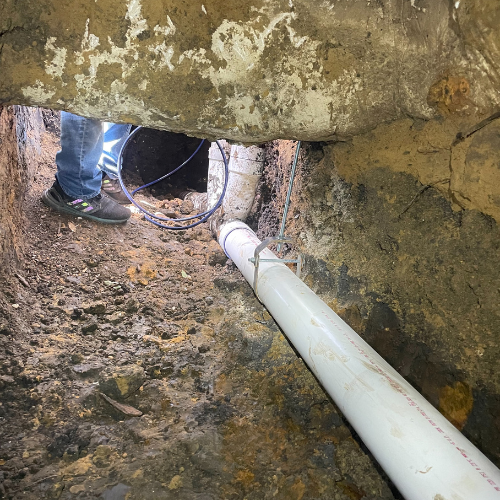
A real-world example from the McKinney area: a family kept calling for “another small repair” after pinhole leaks appeared near kitchen and bathroom supply lines. After inspection confirmed broader pipe degradation, they moved forward with repiping. The improvement wasn’t just fewer leaks—it was steadier pressure and fewer fixture issues.
If you’re seeing repeated problems, it’s reasonable to ask whether you need PIPE REPAIR or a broader plan like repiping services. And if your concern is foundation-related, SLAB LEAK REPAIR may be the first step toward understanding the true scope.
Emergency Plumbing Services: What to Do First (and Why It Matters)
When something goes wrong—water spraying, a sewer backup, or a complete loss of hot water—it feels urgent because it is. But rushing into the wrong actions can worsen the damage or create safety risks.
For emergency plumbing situations, homeowners and businesses should focus on three priorities:
- Reduce water flow (shut off supply if safe)
- Protect property (move valuables, contain water)
- Call for rapid assessment and repair
In McKinney, the “first hour” can determine whether a leak becomes a localized repair or a full restoration project. That’s why many customers look for EMERGENCY PLUMBING SERVICES and fast response times.
Common emergency scenarios include:
- Burst or leaking pipes
- Sewer line backups
- Water heater failures that leave a home without hot water
- Visible slab or foundation leaks
And if the issue involves drainage, quick intervention matters. For sewer and drain problems, professional services may include advanced clearing methods like hydro jetting, plus inspection to prevent repeat backups.
If you’re dealing with a tank or water heater that’s failing, consider asking whether WATER HEATER REPLACEMENT is the safer path. For systems that run long or show repeated failures, replacement can protect against sudden breakdowns and reduce long-term cost volatility.
What This Means for Businesses in McKinney, TX
For local businesses in McKinney—restaurants, offices, retail shops, and multi-tenant properties—plumbing problems affect more than comfort. They interrupt operations, damage inventory, and create reliability concerns that customers notice immediately. A leaking restroom line can close a facility area. A clogged drain can halt prep work in a kitchen. A hot water outage can disrupt daily operations and cleaning schedules.
Aging pipes also tend to show up differently in commercial settings. Instead of one household fixture, businesses often experience repeated issues across multiple sinks, toilets, and wash areas. That’s why proactive plumbing services and timely diagnostics matter. Regular maintenance can reduce downtime, while accurate leak detection helps facilities avoid hidden damage behind walls and ceilings—where repairs typically cost more due to access and restoration requirements.
Businesses also benefit from a clear plan. Knowing when to repair versus when to schedule repiping or sewer line work prevents “surprise emergencies.” And because McKinney’s weather can swing significantly through the year, the stress on plumbing systems can increase—especially when temperature changes affect expansion, pressure, and water usage patterns.
For property managers and owners, the goal is simple: fewer disruptions and predictable repair schedules. With the right plumbing partner, you can keep systems reliable and protect your building investment.
Frequently Asked Questions
Q: How can I tell if I have a slab leak versus a regular pipe leak in my McKinney home?
A: Slab leaks often show up as unexplained moisture, damp flooring, or rising water bills without obvious dripping. Sometimes you’ll notice warm spots on the floor, cracks in tile, or persistent musty odors. Regular leaks are more likely to show as visible water around supply lines or fixtures. Because slab leaks are hidden, accurate detection matters—professionals typically use diagnostic testing and location methods rather than guessing. If you suspect a slab leak, ask about targeted assessment and SLAB LEAK REPAIR to confirm the issue before opening up areas of your home.
Q: What’s the safest way to unclog a toilet without making the problem worse?
A: Start by stopping the water overflow risk. Turn off the water supply to the toilet if it’s actively running. Use a plunger designed for toilets (flange plunger) and apply steady pressure, not random force. Avoid using harsh chemicals, since they can damage parts and complicate plumbing diagnosis. If the clog keeps returning, the cause may be deeper than the bowl—like a venting problem, drainage line restriction, or worn internal components. For repeat issues, look into TOILET REPAIR to address the underlying mechanism and prevent future clogs.
Q: My water heater is making noise—does that mean I need water heater repair or replacement?
A: Noise often signals sediment buildup or failing components. Rumbling or popping can occur when minerals collect at the bottom of the tank and heat unevenly. If the unit is leaking, lacks hot water, or triggers repeated failures, it may be safer to consider WATER HEATER REPLACEMENT rather than repeated repairs. A professional evaluation checks temperature performance, safety controls, and the condition of key parts. That assessment helps you choose the right path—especially because replacing a failing system can be more cost-effective than multiple short-term fixes.
Q: Can a drain cleaning solve recurring clogs, or do I need pipe repair?
A: It depends on the cause. Recurring clogs can come from buildup, grease, hair, mineral scale, or tree roots affecting the line. Professional drain cleaning often clears buildup and restores flow, but if the pipe is damaged or obstructed structurally, cleaning alone may not hold. If you notice persistent slow drains, repeated backups, or gurgling, ask about inspection and whether the line needs DRAIN REPAIR or more advanced clearing. The goal is to remove the blockage and address the root issue so you’re not dealing with the same problem every few weeks.
Q: What should I do immediately if I have an emergency plumbing issue at my business?
A: First, protect safety and minimize water spread. Shut off the supply if you can do so safely, and contain water where possible. Avoid turning off electrical systems yourself—if water is near outlets or equipment, keep people away and call a professional promptly. Next, document what you see (photos if safe) so the repair team can diagnose quickly. Businesses often benefit from having a plan for EMERGENCY PLUMBING SERVICES because the first steps can reduce downtime and restoration costs. Rapid assessment also helps prevent secondary damage from mold, warped materials, or sewer contamination.
Q: How do I know whether I need faucet repair or faucet installation?
A: Faucet issues can be simple or system-related. A dripping faucet often points to worn washers, cartridges, or seals—repair may fix the problem quickly. Low flow or inconsistent pressure might indicate supply line issues, aerator buildup, or a bigger pressure problem. If the faucet is damaged, corroded, or repeatedly fails after repairs, replacement through FAUCET INSTALLATION can be more reliable. A technician can also check for leaks behind the wall and confirm whether the problem is the faucet itself or the plumbing connection.
Q: Do I really need water heater maintenance, and what does it include?
A: Maintenance helps prevent failures by addressing common wear points before they cause outages. For many systems, it includes inspecting performance, checking safety functions, and managing sediment buildup that affects efficiency and lifespan. Regular service can also help you catch small leaks early and keep the unit operating safely. If you’re using an older electric or gas heater, maintenance becomes even more valuable because components age at different rates. Ask about a maintenance plan and whether your unit would benefit from WATER HEATER MAINTENANCE to reduce the risk of sudden breakdowns during peak usage.
Ready to Get Started?
If your plumbing system is showing signs of wear, acting sooner usually costs less than responding after damage spreads. In McKinney, summer heat and year-round temperature shifts can stress older pipes, increase water demand, and make small leaks grow faster than expected. Waiting can lead to hidden moisture, higher utility bills, and emergency repairs that disrupt daily life or business operations.
Here’s a smart next step: schedule a diagnostic visit and ask for a clear repair plan—what’s failing, where it’s failing, and what the safest long-term solution looks like. If you’re dealing with drainage problems, request an evaluation of the line. If you suspect a slab leak, focus on SLAB LEAK REPAIR assessment. For water heater issues, get an inspection before you lose hot water unexpectedly.
About Sewell Plumbing Services
Sewell Plumbing Services serves homeowners and businesses in McKinney, TX with practical, diagnostic-first plumbing repairs for aging pipe systems. The team focuses on safe, code-compliant work and clear communication—so you understand what’s happening and why a repair (or replacement) is recommended. With local presence and hands-on experience, Sewell Plumbing helps customers avoid repeat failures and protect property from hidden water damage. Learn more at Sewell Plumbing Services.